


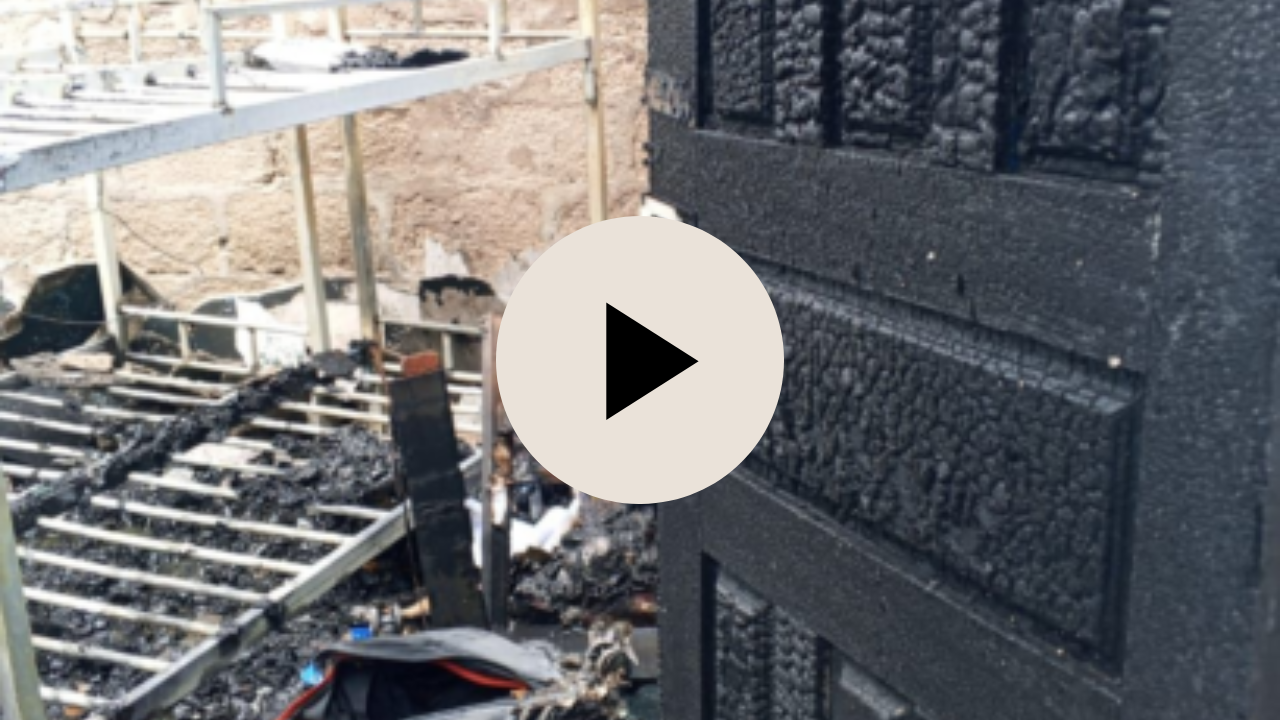
A nursing trainee is currently receiving treatment at the Effia Nkwanta Regional Hospital after sustaining burn injuries during a fire that swept through part of the female students’ dormitory at the Government Secretarial School in Sekondi on Saturday morning. The blaze, which broke out in the early hours of the day, left behind a trail of destruction, destroying personal belongings, damaging school property, and leaving dozens of students temporarily without accommodation.
The identity of the injured student has not been made public, but she was reported to be among twenty female trainees who occupied the two dormitory rooms that bore the brunt of the inferno. According to accounts from the scene, the young woman suffered burns severe enough to require immediate emergency care and was rushed to hospital shortly after the fire was discovered.
How the Incident Unfolded
The fire is reported to have started at around 09:30 GMT on Saturday, June 13, catching many of the dormitory’s occupants off guard. Within minutes, smoke began billowing from the upper floor of the dormitory block, and flames quickly spread across the affected rooms. Students who were present at the time described a scene of confusion and fear as the smell of smoke alerted residents to the danger.
Eyewitnesses say that as the flames intensified, students who were inside the building scrambled to get out, with some grabbing only the essentials they could carry in the rush to safety. Other residents and staff members reportedly assisted in ensuring that everyone in the affected rooms made it out of the building before the fire could spread further. Despite the chaos, there was a concerted effort to account for all occupants of the two rooms, and by the time firefighters arrived, the evacuation appeared to have been largely successful, with only one student sustaining injuries.
Firefighters Respond Swiftly
News of the fire was quickly relayed to the Ghana National Fire Service (GNFS), whose personnel arrived at the school premises at approximately 09:37 GMT, just minutes after the blaze was first reported. On arrival, the firefighting crew moved swiftly to assess the situation and began operations aimed at containing the fire before it could engulf additional sections of the dormitory or spread to nearby structures.
For nearly an hour, firefighters battled the flames, working to bring the situation under control while also working to protect the rest of the building and its remaining occupants. Their efforts paid off: by 10:25 GMT, the fire had been completely extinguished, and the immediate danger to the wider dormitory complex had passed. Officials have credited the rapid response of the fire service with preventing what could have been a far more catastrophic outcome, given that the building housed a significant number of students at the time.
Extent of the Damage
Although the fire was brought under control relatively quickly, the damage to the two affected dormitory rooms was extensive. Personal items belonging to the twenty students who lived in the rooms were largely destroyed, with many reportedly burnt beyond recognition. Clothing, books, study materials, bedding, mobile phones, laptops and other electronic devices, along with various other valuables, were lost in the blaze.
For students preparing for examinations or coursework, the loss of textbooks, notes and electronic devices represents not just a financial setback but also a disruption to their academic progress. Beyond personal effects, the structure itself and various items of school property within the affected rooms also sustained significant damage. While a full assessment is still underway, preliminary estimates suggest that the losses could run into the hundreds of thousands of cedis once all the damage — to both personal belongings and institutional property — is accounted for.
Beyond the material losses, school authorities and observers have noted the emotional toll the incident has taken on the affected students. For many of the young trainees, the dormitory represented not just a place to sleep but a home away from home, filled with personal items accumulated over months or years of study. Watching those belongings go up in flames, on top of witnessing a fellow student suffer burn injuries, has reportedly left many shaken.
NADMO Confirms Incident, Begins Assessment
The National Disaster Management Organisation (NADMO) has confirmed that the fire occurred and indicated that its officials are already on the ground assessing the scope of the damage. The Sekondi-Takoradi Director of NADMO, Alhaji Abubakar Kamal, described the incident as an unfortunate one and expressed concern over the impact it has had on the affected students, both in terms of the injuries sustained and the loss of personal belongings.
According to Alhaji Kamal, assessment teams have been dispatched to the school to determine the full extent of the losses suffered by both the institution and the individual students whose rooms were affected. He indicated that this assessment would help authorities identify what kind of support — whether in the form of replacement items, temporary accommodation, or other forms of assistance — would be needed to help the students recover from the incident, as well as what resources the injured student might require during her recovery.
Cause of the Fire Still Unknown
As of the time of reporting, the exact cause of the fire had not yet been established. Investigators are expected to carry out a detailed examination of the affected dormitory rooms in the coming days in an effort to determine what sparked the blaze. Particular attention is likely to be paid to whether any electrical faults, structural issues, or other safety-related factors may have played a role in the outbreak, given the potential implications for fire prevention measures at the school and similar institutions.
Renewed Calls for Better Fire Safety in Schools
The incident has reignited discussions around fire safety standards in educational institutions across the country, particularly in dormitories and other residential facilities where large numbers of students live in close quarters. Such facilities often house dozens of occupants per building, frequently with limited escape routes, ageing electrical wiring, and minimal fire suppression equipment — conditions that can turn a small spark into a major disaster within minutes.
Stakeholders are likely to renew calls for routine fire safety inspections, the installation of smoke detectors and fire extinguishers in dormitories, and regular fire drills to ensure that students know how to respond quickly in the event of an emergency. As the injured student continues her recovery at the Effia Nkwanta Regional Hospital, and as NADMO and school authorities work to support the affected students and assess the full cost of the damage, the incident serves as a stark reminder of the importance of proactive fire safety measures in safeguarding the lives and property of students across Ghana’s educational institutions.